Tuesday, July 22, 2008

Kevin & Bean's Christmastime in the 909

Check out new holiday tracks from Billy Idol, Pennywise, Coldplay, My Chemical Romance, plus the hilarity of Kevin & Bean and Friends. 1. Greenbrier Lane Christmastime in The 909 2. Billy Idol Yellin' At The christmas Tree 3. "Karl Malone" Kwanzaa 4. Jimmy Eat World If You Were Born Today 5. Kathy Griffin Christmas in Vegas 6. Don Francisco Feliz Navidad, Part One 7. Pennywise Merry Christmas 8. Kevin's New Year's Wishes 9. Richard Cheese & Lounge Against The Machine Jingle Bells 10. Coldplay 2000 Miles 11. Jason Biggs' Holiday Message 12. The Dan Band Rock You Hard This Christmas 13. Charles The Security Guard One For The Ladies 14. Crazy Gideon Crazy For Christmas 15. Sarah Silverman Give The Jew Girl Toys 16. Mole's Christmas Wish 17. My Chemical Romance All I Want For Christmas is You 18. The Walkmen Xmas 19. "Donald Trump" The Christmas Apprentice 20. Andy Dick & Willie Wisely Happy B-Day J.C. 21. Face to Face Merry Xmas 22. Jerry Springer Pink Flamingos 23. Super Steve With The Whole Enchilada Feliz Navidad, Part Two 24. Switchfoot Old Borego 25. "Shaquille O'Neal" Holiday Heat 26. Snow Patrol When I Get Home For Christmas 27. Bean's New Year's Wishes 28. William Shatner It Hasn't Happened Yet 29. Loquecia's Christmas Review 30. "Andy Rooney" Did You Ever Wonder? 
Customer Review: Ho ho ho, Christmastime is back.
Almost every year, radio station KROQ releases a Christmas album for charity, hosted by deejays Kevin & Bean. This was the 2003 Christmas CD. It features Christmas songs and comedy routines. Many of the recordings here are original to this album. Most of the songs are good and most of the comedy is funny. Here is the complete track listing: 1. "Christmastime in the 909" - Greenbrier Lane 2. "Yellin' at the Christmas Tree" - Billy Idol 3. "Kwanzaa" - "Karl Malone" 4. "If You Were Born Today" - Jimmy Eat World 5. "Christmas in Vegas" - Kathy Griffin 6. "Feliz Navidad, Part One" - Don Francisco 7. Merry Christmas - Pennywise 8. "Kevin's New Year's Wishes" 9. "Jingle Bells" - Richard Cheese and Lounge Against the Machine 10. 2000 Miles - Coldplay 11. "Jason Biggs' Holiday Message" 12. "Rock You Hard This Christmas" - The Dan Band 13. "One for the Ladies" - Charles The Security Guard 14. "Crazy for Christmas" - Crazy Gideon 15. "Give the Jew Girl Toys" - Sarah Silverman 16. "Mole's Christmas Wish" 17. "All I Want for Christmas Is You - My Chemical Romance 18. "Xmas" - The Walkmen 19. "Donald Trump" - The Christmas Apprentice 20. Andy Dick & Willie Wisely - Happy B-Day J.C. 21. Face to Face - Merry Xmas 22. Jerry Springer - Pink Flamingos 23. Super Steve With The Whole Enchilada - Feliz Navidad, Part Two 24. Switchfoot - Old Borego 25. "Shaquille O'Neal" - Holiday Heat 26. Snow Patrol - When I Get Home For Christmas 27. Bean's New Year's Wishes 28. William Shatner - It Hasn't Happened Yet 29. Loquecia's Christmas Review 30. "Andy Rooney" - Did You Ever Wonder?


Magic is an art of several kinds, we know. Generally, close up, conjuring, mentalism and stage shows are the categories. Sleights of hand and illusion magic (sleights on stage!) are yet another. Some even divide magic according to the props used - cards, coins, ropes or apparently bigger instruments and so on.

Classification becomes complex when it is done in terms of the effect produced: transformation, transposition, telepathy, vanishing, appearing and what not!

Have you ever noticed that even amid such a fascinating diversity, magic is an art of socialism? In magic, the trick you perform using a coin or a feat you accomplish using a huge illusion prop, leaves the same shock of amazement in the minds of the viewers. This is one aspect of that socialism.

Whatever preparations you do, how much you talk, whatever backdrops you use, to measure the value of your performance, the layman has got just one occasion: the moment when the effect emerges. Yes, nothing but only the effect prompts your spectators to certify the magic they see. If the effect fails, everything fails - the speech, the decors, the music, the costume, all turns vain.

A rich magician should not necessarily gain audience praise simply because he has invested a lot, unless he takes care of the beauty of his effects. A financially feeble magician, on the other hand, may earn more accolades simply for being so perfect with his effects. Thus magic upholds another aspect of socialism.

There was a magician, who at first used to get not the money he expected, but what the organizers decided. Undeterred, the magician invested a good part of his meager income for replenishing more cute effects. The demand increased. At last he got the ball in his court. He got that freedom to pick the most appropriate client and most legitimate fee. Remember, this is magical socialism. In magic opportunities are equal.

In magic, not the money, but your creativity makes you a prudent investor.

[Prepared by K.P. Sivakumar on behalf of magician Gopinath Muthukad as an editorial for June 2008 issue of Vismayam Magical News]

http://magicweekly.blogspot.com

latin music download

Yellowcard - SHIELD T-shirt, Charcoal

Yellowcard is a rock band from Jacksonville, Florida. Their music can be classified as pop punk, and contains elements of emocore. A distinct characteristic of the music of Yellowcard is their use of a violin, making them somewhat unique within this genre


Rhythm and blues (or R&B) was coined as a musical marketing term in the United States in 1949 by Jerry Wexler at Billboard magazine, and was used to designate upbeat popular music performed by African American artists that combined jazz, gospel, and blues. It replaced the term race music, which was deemed offensive, as well as the Billboard category name "Harlem Hit Parade," in June of 1949, and was initially used to identify the rocking style of music that combined the 12 bar blues format and boogie woogie with a backbeat, later known as rock and roll. In 1948, RCA Victor was marketing black music under the name "Blues and Rhythm," but the words were reversed by Wexler of Atlantic Records, the most aggressive and most dominant label in the R&B field in the early years. By the 1970s, rhythm and blues was being used as a blanket term to describe soul and funk as well. Today, the acronym "R&B" is almost always used instead of "rhythm and blues", and defines the modern version of the soul and funk influenced African-American pop music that originated with the demise of disco in 1980.

Original rhythm and blues
In its first manifestation, rhythm and blues was a predecessor to rock and roll. It was strongly influenced by jazz and jump music as well as black gospel music, and influenced jazz in return (hard bop was the product of the influence of rhythm and blues, blues, and gospel music on bebop) and African tribal beats.

The first rock and roll consisted of rhythm and blues songs like "Rocket 88" and "Shake, Rattle and Roll" making an appearance on the popular music charts as well as the R&B charts. "Whole Lotta Shakin' Goin' On", the first hit by Jerry Lee Lewis was an R&B cover song that made #1 on pop, R&B and country and western charts.

Musicians paid little attention to the distinction between jazz and rhythm and blues, and frequently recorded in both genres. Numerous swing bands (for example, Jay McShann's, Tiny Bradshaw's, and Johnny Otis's) also recorded rhythm and blues. Count Basie had a weekly live rhythm and blues broadcast from Harlem. Even a bebop icon like arranger Tadd Dameron also arranged for Bull Moose Jackson and spent two years as Jackson's pianist after establishing himself in bebop. Most of the studio musicians in R&B were jazz musicians. And it worked in the other direction as well. Many of the musicians on Charlie Mingus's breakthrough jazz recordings were R&B veterans. Lionel Hampton's big band of the early 1940s, which produced the classic recording "Flying Home" (tenor sax solo by Illinois Jacquet) was the breeding ground for many of the bebop legends of the 1950s. Eddie "Cleanhead" Vinson was a one-man fusion, a bebop saxophonist and a blues shouter.

The 1950s was the premier decade for classic rhythm and blues. Overlapping with other genres such as jazz and rock and roll, R&B also developed regional variations. A strong, distinct style straddling the border with blues came out of New Orleans and was based on a rolling piano style first made famous by Professor Longhair. In the late 1950s, Fats Domino hit the national charts with "Blueberry Hill" and "Ain't That a Shame". Other artists who popularized this Louisiana flavor of R&B included Clarence "Frogman" Henry, Frankie Ford, Irma Thomas, The Neville Brothers, and Dr. John.

At the start of their career, The Rolling Stones were essentially an R&B band.

Contemporary R&B

It was not until the 1980s that the term "R&B" regained ordinary usage. During that time, the soul music of James Brown and Sly & the Family Stone had adapted elements from psychedelic music and other styles through the work of performers like George Clinton. Funk also became a major part of disco, a kind of dance pop electronic music. By the early 1980s, however, funk and soul had become sultry and sexually-charged with the work of Prince and others. At that time, the modern style of contemporary R&B came to be a major part of American popular music.

R&B today defines a style of African-American music, originating after the demise of disco in 1980, that combines elements of soul music, funk music, pop music, and (after 1986) hip hop in the form known as contemporary R&B. In this context only the abbreviation "R&B" is used, not the full expression.

Sometimes referred to as "urban contemporary" (the name of the radio format that plays hip hop and R&B music) or "urban pop", contemporary R&B is distinguished by a slick, electronic record production style, drum machine-backed rhythms, and a smooth, lush style of vocal arrangement. Uses of hip hop inspired beats are typical, although the roughness and grit inherent in hip hop are usually reduced and smoothed out.

History

Contemporary R&B singer Mary J. Blige performs on the National Mall during the NFL Kickoff Live 2003 Concert.With the transition from soul to R&B in the early to mid 1980s, solo singer Luther Vandross and new stars like Prince (Purple Rain) and Michael Jackson (Off the Wall, Thriller) took over, and dominated the primary schools throughout the 1980s. Jackson's Thriller, which repopularized black music with pop audiences after a post-disco backlash among United States mainstream audiences, is the best-selling album of all time worldwide.

Female R&B singers like Whitney Houston and Janet Jackson gained great popularity during the last half of the decade; and Tina Turner, then in her 50s, came back with a series of hits with crossover appeal. Also popular was New Edition, a group of teenagers who served as the prototype for later boy bands such as the New Kids on the Block, The Backstreet Boys, and others.

In 1986, Teddy Riley began producing R&B recordings that included influences from the increasingly popular genre of hip hop music. This combination of R&B style and hip-hop rhythms was termed new jack swing, and artists such as Keith Sweat, Guy, Jodeci, and BellBivDeVoe (featuring former members of New Edition). Another popular, but short-lived group, with more pronounced R&B roots was Levert, whose lead singer, Gerald Levert, was the son of O'Jays lead vocalist Eddie Levert.

In the early 1990s, R&B group Boyz II Men repopularized classic-soul inspired vocal harmony, and several similar groups (among them Shai, Soul for Real, and Dru Hill) would follow in their footsteps. Boyz II Men, and several of their competitors, benefited from lush ballads from producers such as Babyface and Jimmy Jam and Terry Lewis, who brought Michael Jackson's sister Janet Jackson to fame during the late 1980s and early 1990s. As a solo artist, Babyface and contemporaries such as Brian McKnight eschewed prominent hip hop influences, and recorded in a smooth, soft style of R&B termed quiet storm.

In the early 1990s, alternative rock, adult contemporary, and gangsta rap ruled the charts, and R&B artists began adding even more of a rap/hip hop sound to their work. New jack swing had its synthesizer-heavy rhythm tracks replaced by grittier East Coast hip hop inspired backing tracks, resulting in a genre labeled "hip hop soul" by Sean "Puffy" Combs, producer for Mary J. Blige. Blige and other hip hop soul artists such as R. Kelly, Montell Jordan, Brandy, and Aaliyah, more than their slicker new jack swing predecessors, brought hip hop slang, style, and attitudes to R&B music. The subgenre also includes a heavy gospel influence with vocal inflections and sounds. The style became less popular by the end of the 1990s, but later experienced a resurgence. The hip hop soul sound continues to be heard in the work of artists such as Jaheim, Ashanti, Amerie, and Keyshia Cole.

During the mid-1990s, highly successful artists such as Mariah Carey, girl group TLC and the aforementioned Boyz II Men brought contemporary R&B to the mainstream. Boyz II Men and Mariah Carey recorded several Billboard Hot 100 number-one hits, including "One Sweet Day", a collaboration between both acts which became the longest-running number-one hit in Hot 100 history. In addition, both Boyz II Men and TLC released albums in 1994, II and CrazySexyCool, respectively, that sold over ten million copies, earning them diamond certification from the Recording Industry Association of America. Other top-selling R&B artists from this era included singer Toni Braxton, singer/songwriter/producer R. Kelly, and girl group En Vogue.

During the later part of the decade, neo soul, which added a 1970s soul music influence to the hip hop soul blend, arose, led by artists such as D'Angelo, Lauryn Hill, and Maxwell. Several artists, most notably Missy Elliott, further blurred the line between R&B and hip hop by recording in both genres simultaneously.

During the late-1990s and early 2000s, the influence of pop on R&B could be heard in the work of several pop musicians, most notably Jennifer Lopez and the later recordings of *NSYNC and the early recordings of 98 Degrees. *NSYNC's lead singer Justin Timberlake went on to make several solo recordings that showed heavy influences from both R&B and hip hop music. Other pop stars who perform heavily R&B influenced pop music (sometimes referred to as "dirty pop","urban pop", or a modern definition of "hip pop") include Britney Spears, Gwen Stefani, and Pink.

In the United Kingdom, R&B found its way into the UK garage subgenre of 2Step, typified by R&B-style singing accompanied by breakbeat/jungle rhythms. Among the most notable 2Step artists is Craig David, who crossed over to American R&B audiences in the early 2000s.

Present day
By the 2000s, the cross-pollination between R&B and hip hop had increased to the point where, in most cases, the only prominent difference between a record being a hip hop record or an R&B record is whether its vocals are rapped or sung. Mainstream modern R&B has a sound more based on rhythm than hip hop soul had, and lacks the hardcore and soulful urban "grinding" feel on which hip-hop soul relied. That rhythmic element descends from new jack swing. R&B began to focus more on solo artists rather than groups as the 2000s progressed. As of 2005, the most prominent R&B artists include Usher, Beyonc (formerly of Destiny's Child), and Mariah Carey whose music often blurs the line between contemporary R&B and pop.

Soulful R&B continues to be popular, with artists such as Alicia Keys,John Legend, Toni Braxton and American Idol winner Fantasia showcasing classic influences in their work. Some R&B singers have used elements of Caribbean music in their work, especially dancehall and reggaeton.

Quiet storm, while still existent, is no longer a dominant presence on the pop charts, and is generally confined to urban adult contemporary radio. Most of the prominent quiet storm artists, including Babyface and Gerald Levert, began their careers in the 1980s and 1990s, although newer artists such as Kem also record in the quiet storm style. Its influence can still be seen in singles such as Mariah Carey's "We Belong Together".

In addition, several producers have developed specialized styles of song production. Timbaland, for example, became notable for his hip hop and jungle based syncopated productions in the late-1990s, during which time he produced R&B hits for Aaliyah, Ginuwine, and singer/rapper Missy Elliott. By the end of the decade, Timbaland's influences had shifted R&B songs towards a sound that approximated his own, with slightly less of a hip hop feel. Lil' Jon became famous for a style he termed "crunk & B", deriving its influences from the Southern hip hop subclassification of crunk music. Jon gave his main R&B artist, Ciara, the title of "The First Lady of Crunk & B", and Brooke Valentine and Usher have also recorded R&B songs with strong crunk influences.

Contemporary R&B subgenres
These are the major subgenres of contemporary R&B, roughly in chronological order of popularity.

Quiet storm

Quiet storm is a broad category of R&B and jazz-based music that is mellow, laid-back and often romantic. Its name comes from an innovative radio show that originated at WHUR at Howard University in the mid-1970s, named after Smokey Robinson's hit 1975 single "Quiet Storm". Unlike contemporary R&B, quiet storm shows little influence from hip hop, and generally plays to the urban adult contemporary crowd. The genre achieved great mainstream success during the 1980s with artists like Luther Vandross, Anita Baker, and Sade. Among other notable quiet storm musicians are Lionel Richie, Gerald Levert, Joe, and Brian McKnight.

New jack swing
A fusion of hip hop music and R&B, new jack swing was distinguished by significant use of rapped choruses or bridges and prominent use of drum machines such as the Roland TR-808. Teddy Riley and his group Guy are credited with being the inventor of the genre; other notable figures include Bobby Brown, Jimmy Jam & Terry Lewis, Jodeci, and Boyz II Men. A female alternative, new jill swing, was championed by acts such as Janet Jackson, Total, Shanice, TLC, and SWV.

Hip hop soul
Essentially new jack swing for the 1990s, hip hop soul took the style further towards a pure hip hop sound, usually accompanied by a nervy, gangsta rap-esque image. The sound was remenescent of funk with the inclusion of relatively darker baselines with elongated groove notes. Among its most notable figures were Montell Jordan, BLACKstreet, Groove Theory, and the "Queen of Hip Hop Soul", Mary J. Blige.

Neo soul
Neo soul blends a hip hop influenced R&B sound with the classic soul of the 1970s. True neo soul is characterized by an earthy feel, accented by soul-styled harmonies, and accompanied by alternative hip hop beats. It generally has a much less mainstream sound than general R&B music. Some artists of this genre include Van Hunt, Tony! Toni! Ton!, Angie Stone, Maxwell, D'Angelo, Erykah Badu, Lauryn Hill, John Legend, Alicia Keys, and Jill Scott.

Visit me at my consumers product websites http://www.bestgiftsdeal.com a website that provides links to consumer products and article reviews. Here are links in reference to this article.Rhythm and Blues

dance dance music video

Soulstice

Customer Review: Here's a follow-up I got excited about...
... And then came the disappointment. Having been a big fan of David Ryan Harris's old funk/rock band, Follow For Now, and then loving his self-titled solo effort (and the related Four Songs sampler EP), I was intrigued to learn of three other solo albums after his mostly disappointing effort with the band, the Brand New Immortals, and their only album to date, Tragic Show. Based entirely on the strength of FFN and DRH, I forged blindly ahead and ordered copies of Soulstice and Atlanta without hearing a morsel of either album, and pre-ordered Harris' yet-to-be released CD, Bittersweet. With Soulstice, Harris forsakes his early funk/soul/rock roots, instead planting himself firmly in the dreaded 'singer-songwriter' mold. The bio on Harris' MySpace website indicates the direction he's going, with this pretentious bit of self-promotion: "David Ryan Harris is on a quest that has an almost mythological dimension to it. Armed with a voice that falls somewhere between Stevie Wonder and Donny Hathaway, songwriting that combines beautiful haunting melodies with sharp storytelling and guitar playing that is blues influenced and rock sharpened, David has been searching for the truth in music." Etc., etc. Well, with my first listen under my belt, I can honestly say there isn't anything memorable here, at all. Missing are the crunchy guitarwork, soulful vocals and groove-inducing songwriting from his early work. Instead, each song on Soulstice blends into a bland whorl of uninspired, folksy, strum-strum-strummed chord changes, awfully rhymed lyrics and flat vocals that left me wondering if I made the right decision to buy Atlanta, and whether or not I should cancel my pre-order for Bittersweet. In the meantime, I'm going to give Soulstice another listen, see if it grows on me. Who knows - maybe it will. Stranger things have happened. Then I'll listen to Atlanta as soon as it arrives, and I'll get back to you. Until then, three stars is as much as I can muster for this one...


The Pro's (and woes!) of becoming a Mobile D.J!

So how do you become a Mobile D.J?, easy!, just call yourself one!. There are no diploma's or qualifications and no graduation ceremony. However the time may come where you are called upon to demonstrate your D.J'ing skills and often this will be in front of 100's of people at your first gig. Entertaining such a a large number of people can be a very daunting and nerve racking task.

Not just music and flashing lights

Mobile D.J'ing is different to club or radio D.J'ing. Just spending a fortune on the very latest equipment and latest chart music won't make you a successful D.J or get you re-booked. Being a Mobile D.J is also about being an entertainer, rather then just being a Jukebox surrounded by lots of pretty lights!. You will also have to play a lot of music genres which you may not otherwise choose to listen to by choice.

A successful D.J is one who plays to his or her Audience, who can break the ice at difficult functions and who isn't out to satisfy their own ego's. Most D.J's learn to "read" the audience, and are frequently watching the dancefloor to gauge what music will work next. At Mobile Functions such as Weddings, your audience may take some time to get onto the dancefloor and this is where Microphone work is important in order to break the ice, make your audience feel welcome and encourage them onto the dancefloor.

Where and how can I learn D.J skills and get advice?

Some people simply may not be cut out to D.J. Others may pick up the skills in a few months, others may take a year or longer. There is no hard or fast rule to learning the basics. The best, and often the most successful route to becoming a D.J is by helping another D.J at weekends.

Consider volunteering your services to another D.J locally. Helping out as a "Roadie" may not be financially rewarding but you are essentially learning new skills for free, which would cost you 100's on a course. Most D.J's will often cover your expenses and refreshments, some may even pay you, in return for your help, but don't expect to live off it, after all they are doing you a favour by teaching you a trade, and sharing their knowledge.

Learning to D.J by becoming a Roadie is the fastest way to learn the business and by actually watching another Professional D.J at work can teach you more than in a classroom or College environment. Most D.J's themselves got into the business this way, so don't be afraid to ask.

What music will I need?

This is entirely dependant on the type of functions which you are attending. Most Mobile DJ's will set themselves up to cover all types of functions from Childrens' Parties to 75th Wedding Anniversaries, and this means playing music to all age groups. Ideally you will need to invest in virtually all types of Genres. Rock & Roll, 1960's, 1970's, Disco, Funk, Soul, Motown, 1980's, 1990's as well as the latest chart and club dance music.

If you are setting yourself up as a specialist DJ, offering services for one age group or type of function, then this will be a lot easier to fund and build a music collection. However you may wish to gauge the demand for that type of music and DJ in your area.

What Equipment do I need to buy?

Again it's not the equipment which entertains, it's the D.J. By having the latest equipment it won't make you any better as a D.J. It is possible to start up on a budget of 1000, which will get you a sound system and a few lighting effects. If your budget won't stretch to this, then you may need to consider buying 2nd hand or hiring the equipment. More information on choosing equipment is covered on another article.

Any good reason to start off by helping another D.J, is that you gain the experience and also find out if D.J'ing suits you BEFORE spending a lot of money and committment on buying equipment.

Buying a comprehensive music library is far more important than how much lighting you have, and should be your first consideration. You can build up your lighting, and upgrade your sound system (if required) once the work starts coming in to justify it.

What else do I need?

Committment, dedication and enthusiasm is a must. As is patience and a good sense of humour. By definition, most Mobile D.J's work the weekends, so if you get a good reputation and a full diary, you may have to cut down on your own personal social activities, and this can also put a strain on relationships, so make sure your partner / spouse is also agreeable!.

From a professional prospective, you should also obtain some level of PLI (Public Liability Insurance), as a business within the UK it is a requirement to have some minimum level of insurance cover in order to protect you in the event of causing harm to a third party through accident or neglect. The amount of PLI cover required varies from 2 million to 10 million. You may find that 2 Million cover is adequate for your area, although some hotel chains may insist on a minimum of 5 million to work at their venues.

You may be asked to produce evidence of your PLI cover before being allowed to set up in some Hotels, and Council run establishments, so it is wise to get cover sooner, rather than later.

How about a D.J Course or Workshop?

These are few and far between especially in the UK, and usually aimed at teaching you beatmixing or turntable skills, which are of little use to the Novice Mobile D.J. If you are aiming for club work, then you may find a course to be of interest, however these courses have limited use on the Mobile Circuit.

D.J courses can cost between 100 and 1000s ($100 - $3000). Like any industry there are risks, so it is important to find out exactly what the course involves and whether the information is of any value to you before parting with your money!. Some courses may of little use, others may teach you the basics find out exactly what each one offers and weigh up the benefits to you.

If you are still in education and want to find a list of official College / University courses on further education opportunities in media, radio, stage and technical then ask at your High School for further information.

For more information on becoming a DJ, then why not join our DJ forum at http://www.dj-forum.co.uk or visit my blog at http://blog-community.net/mobile_disco/

dance music cd

Whipped Cream & Other Delights (40th Anniversary Edition)

40th Anniversary Edition Of The Classic Album!

1965's Whipped Cream & Other Delights transformed Herb Alpert & The Tijuana into bonafide superstars, spending an incredible 8 straight weeks at the top of the charts. The album was not only memorable for its music, but for the iconic cover art which featured model Dolores Erickson strategically swathed in whipped cream. The original twelve tracks revolve around the theme of food and include such classics the triple Grammy-winning hit, "A Taste of Honey" and the Dating Game theme "Whipped Cream." This special 40th Anniversary edition features two studio bonus tracks along with a 20-page booklet and a collector's poster.

Each album in the Herb Alpert Signature Series features meticulously remastered sound, deluxe packaging, detailed liner notes, and an intro by Herb Alpert containing personal recollections and anecdotes.
Customer Review: My own "Whipped Cream" fantasy
I have fond memories of this album from my childhood. I remember my mother trying to hide the album cover because it was so racy for the times(at least in So. LA). But the folks did play it often. The music is still great. It sound as wonderful today as it did forty years ago. It stands the test of time.
Customer Review: Yummy Whipped Cream
Herb Alpert is one of the great trumpet players and this album shows that. I could listen to him for hours.


Teresa Reichlen of the New York City Ballet is a premier dancer in the competitive and demanding world of ballet but, as a person, she remains centered and inspired by her art. Her poised, serene face, long legs and elegant jumps have made her a soloist at age 23 in one of the world's greatest ballet companies.

Her journey from the Russell School of Ballet in Chantilly, Va to the School of American Ballet at age 15 and onto the City Ballet has taught her lessons about expressing herself as an artist and person. The following are three important lessons Reichlen has learned to help her grow as a ballerina and person. These same lessons can help performers in school, sports and the arts advance their talents and more fully express themselves in their field.

Performance Lesson 1: Don't over try on stage

As the NY Times explains, "Since being named a soloist in 2005, Reichlen has preserved her poise and attained a new rigor in her technique. 'It took me a long time to realize that you can try too hard onstage,' she said after a company class one day last month at the New York State Theater. 'Sometimes you just have to settle down. I would always have good shows when I was really tired, and I think it's because I just did what I had to do.'"

Focusing her thoughts and actions only on what is most essential during performances has helped Reichlen stay focused and relaxed in executing the precision needed in ballet.

This same technique can be used by other performers in school, sports and the arts. Before any project, practice, game, performance, or test, you need to ask yourself "What are the most basic things I need to do very well to be successful? What things will I see myself doing if I try too hard and over-react? How can I assure that I stay focused only on the things in my performance that are the most essential for success and not over try?"

Performance Lesson 2: Have a point of view when you perform

Beginning last summer Reichlen performed with Christopher Wheeldon's company, Morphoses. "I got a lot from that experience," she said. "He is very passionate about his ballets and getting the best out of his dancers, so he was pushing me a lot."

Wheeldon explained that she needed to have a point of view when she danced. "Honestly, that was a very hard correction for me to take," she said to the NY Times. "It's not something you can just fix. Some dancers appear to have a whole story behind a ballet - it's just the way they dance - and I'm not like that." But she realized that having a point of view when she dances can move her beyond executing flawless movements to embodying her character and the story.

Every performer in school, sports and the arts needs to have a point of view about their performance. A point of view is an opinion and understanding about why you are performing, studying, and training, and how you want to express yourself to others as an artist, athlete or student.

To get started, you need to first select an upcoming performance, project, test, or game for which you must prepare. Then, answer a series of questions to get outside yourself and imagine the type of idealized, fictional character you must portray during that performance: "What type of character do I need to play during the performance? What is most important to that character and motivates him or her to be successful? What is important to people around the character? How do I act to portray the character and give a masterful performance?"

These questions will help you journey into a fictionalize, ideal world to give yourself a different perspective about the role you must play to be successful during a key performance in school, sports or the arts.

Performance Lesson 3: Be calm on the outside to stay calm on the inside

While on stage Reichlen appears calm and serene. On the inside, however, she has a different experience. "It's funny because people tell me I look calm," she said. "But I don't always feel calm. When I'm the most stressed or angry I become really quiet. Maybe it's my way of dealing. I don't know if I hold it all in, but it's just the way I am - in life and on the stage."

Reichlen is explaining one aspect of the creative tension many performers experience. It is the tension between remaining calm on the outside while working hard on the inside. Some performers feel uncomfortable doing this and want to express their inner intensity openly. However, remaining physically calm on the outside can help your body relax and send messages to your mind that everything is going OK. Your outward calm can keep your inner drive and intensity in check and focused.

Performers in school, sports and the arts should practice this technique while studying, during practices and training. By doing so, you will find that your inner intensity remains more centered and relaxed, and your actions more precise and expressive.

While Reichlen is only 23 years old, she has lived a lifetime in ballet starting at age 3 in a ballet school behind a grocery store in Clifton, Va. Because of her love and dedication to dance, she has naturally developed mental techniques that helped her rise to the top of the ballet world and grow as a person. With her techniques in hand, you can also grow as a student, athlete and artist.

Receive a special bonus when you subscribe to a free biweekly newsletter that provides tips for parents to nurture children's talents: http://www.atalentedmind.com/files/Subscriptions.html

Read a special blog about parenting children talents and share your own opinions and ideas: http://atalentedmind.typepad.com

Learn how Michael Cerreto, Applied Performance Counselor, and A Talented Mind, Inc. can help you or someone you know: http://www.atalentedmind.com

dance dance music video

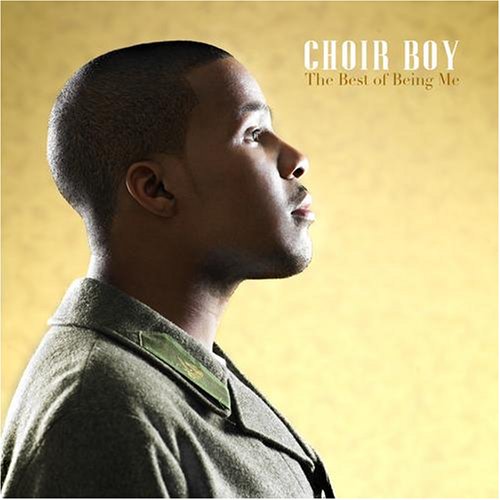
The best of being me

Customer Review: THE BEST ARTIST YOU NEVER HEARD OF!
CHOIR BOY IS VERY INTERESTING ARTIST....EMCEE,PRODUCER,SINGER-SONGWRITER,MUTLI-INSTRUMENTALIST,HELL HE EVEN RECORDED AND MIXED THE ALBUM HIMSELF!THIS ALBUM IS NOT HIS FIRST BUT ACTS AS HIS DEBUT....."THE BEST OF BEING ME" IS A TIMELESS CLASSIC. THINK THE RHYME FLOW OF A JAY-Z, THE SMOOTH SINGING VOICE OF A MICHAEL FRANKS OR CHRIS MARTIN,THE DEPTH OF A NAS OR LUPE FIASCO. HOLD ON..THATS JUST THE ARTIST SIDE HE ALSO PRODUCED 95 % OF THE ALBUM....PLEASE BUY THIS ENTIRE ALBUM AND SPREAD THE WORD LETS GIVE SOMEONE A CHANCE THAT DESERVES IT! CHECK OUT HIS PAGE .... WWW.MYSPACE.COM/THECHOIRBOY
Customer Review: Much Love and respect
I'm a latecomer to the party but between you and Weez's hustle moves alone I know you guys are gonna make it.Keep doing it and fighting that uphill battle to get Jersey Hip Hop where it needs to be....Worldwide!!!!L.A. Times Secret Society signing off!!!!


Do you ever find yourself relentlessly station flipping on an already aggravating drive home from work? You probably have that feeling that if you could just find that one feel-good, sing- along tune you're craving, all the chaos and stress would just melt away. With Sirius Satellite Radio, say goodbye to all your frustrations and program in up to 30 sure-fire stations that will revitalize your mood and satisfy your musical needs, static and commercial-free.

The Sirius stations appeal to people of all different markets and niches. One is the middle-aged "I love all music" types. For these people, there's "Sirius Hits 1," a top 40 station which plays everything from Avril Lavigne, Kanye West and Junior Senior to Fall Out Boy, Nickelback and Linkin Park. The "Sirius Supermix" station shuffles all of the other Sirius stations for one of the most diverse line ups you can imagine.

Need to relax? Do you chill out to light Pop, Rock, Classical, Jazz, Electronica, Country, R&B, Reggae or Talk Radio? Sirius satellite radio has a relaxing station in just about every genre for you! Whether it's Jimmy Buffet, Simon and Garfunkle, Massive Attack or Aretha Franklin, you will find that cup of audio tea for the soul.

One of the best things about satellite radio is that it panders to niche markets. Sometimes fans of the loud and rowdy rock genres have a hard time finding a station to suit their needs. Not on satellite radio! If you're having a hard time finding The Circle Jerks, Dead Kennedys and The Misfits on the radio, try Channel 29's "Punk" station.

Or if you need some Lamb of God, Slayer or Pantera, Channel 27 "Hard Attack" will do you good. Keep the weekend rave playing with Paul Van Dyk and Deep Dish on "Area 33" or breakdance to your favorite energetic tracks by the Chemical Brothers and DJ Icey on Channel 34 "Boombox." Not enough Grand Master Flash, LL Cool J and Run DMC? Check out the Channel 43 "Backspin" for old school rap at its finest.

Other niche markets include Country, with five different Sirius satellite stations: "New Country" (Tim Mcgraw, Terry Underwood, Toby Keith), "Prime Country" (Garth Brooks, Reba McEntire, George Strait), "The Roadhouse" (Johnny Cash, Willie Nelson, Dolly Parton), "Outlaw Country" (Waylon Jennings, Bob Dylan, Merle Haggard) and "Bluegrass" (Ricky Skaggs & KY, Lonesome River Band, Thunder). Christian listeners can choose from "Spirit 66" with powerful hits from Third Day, Avalon and Point of Grace or "Praise 68" with gospel favorites by Kirk Franklin and Yolanda Adams.

The Latin / World markets will also get grooving with XM radio stations tailored specifically to their needs: "Universo Latino" (Latin pop mix including Luis Miguel, Enrique Iglesias and Gloria Estefan), "Rumbon" (Reggaeton with Marc Anthony, Tito Nieves and Ivy Queen), "Band A Parte" (the French language music scene), "Rock Velours" (Canadian soft rock like Celine Dion, Sarah Mclachlan, Michael Buble), and "Energie 2" (urban pop including French Canadians like Eric Lapointe, Simple Plan and Coldplay).

In addition to music, there are even more specific stations to choose from on Sirius satellite radio. Nine sports stations focus on Soccer, Horse Racing, NBA, NFL, Nascar, College Sports, CFL, AFL, ESPN. Talk Radio includes: NPR, CNN, Fox News, BBC, World Radio Network, Entertainment radio, CNBC, Bloomberg financial Radio and Daily Variety.

Need religion, weather, or traffic talk? No problem. Additionally, you can get 24/7 Howard Stern, Martha Stewart and comedy channels.

Get all the information you need on the sirius satellite radio from Mike Selvon's portal, and leave a comment at his satellite radio network blog.

latin music festival

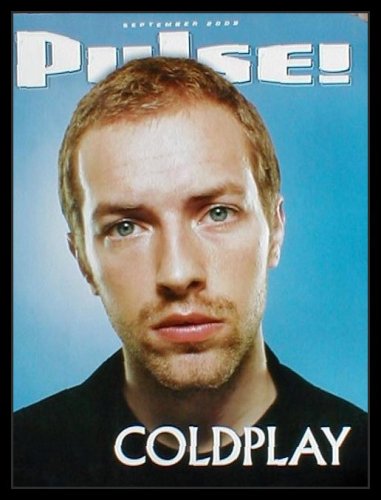
Coldplay (Pulse, Original) Music Framed Poster Print - 18" X 22.5"

We bring you the best selection of Movie Posters, Music Posters, Sports Posters, Art Prints, Television Posters, College Humor, and more! This is the premier destination for finding entertainment posters. Find authentic movie advertisements, increase your celebrity photo and poster collection, locate that missing pop idol piece you need to complete your set, or discover rare concert sheets from your favorite musicians and bands. Whether its that one rare framed art print youve been looking for, or you need to wallpaper your dorm room with the hottest, sexiest posters, this is the place to find everything. Brand new, perfect condition, fast shipping! Buy from the best!!!


In my book "Karaoke Krazy," I give advice on the many ways to be successful as a Karaoke DJ or "KJ." Here is an excerpt:

"Style"

If you are a KJ, your style is every bit as important as your reputation because it is PART of your reputation. It is what defines you.

There is a lot you can do to create a style of your own and it does not always involve how you speak on a microphone.
This section includes things about me, and things I have done to enhance my style.

You may get some ideas, or perhaps you have a style all of your own that you are happy with. Either way you might learn something.

"The Art of Illusion"

There is an art to creating an illusion in the room, one that will draw in and sustain a crowd. It is your job to provide an environment that did not exist prior to your arrival.
The way you dress, the music you play, and how well you work a room and motivate people, are integral parts of the whole. If you miss doing one of these things well, you may survive. However, if you miss more than one of these things, you may not.

What you wear sets the tone in the room. If you are in jeans and a T-shirt, your crowd will wear jeans and T-shirts too.
If you wear trendy clothes, tails, or pink gym shoes and a bow tie, you will set a better tone and people will respond to that. You will also inform people that you are an entertainer and they will prepare to be entertained.

My former manager, J.R., insisted that I always dress like a star. If I was getting off of a tour bus at a gas station, I was required to be picture perfect. His motto was, If you look like a star and act like a star, you are a star. He was right about this. People treat you like a star if you dress like one.
Obviously, if you are doing a private function you need to ask what the theme will be or what dress is required. You will look very out of place at a formal function if you are wearing a cowboy hat and jeans. Likewise, you will feel out of place if you are wearing tails and the guests are wearing cut-offs.

Another detail you might pay attention to is the lighting. I do not advise a lot of bright lights. The room needs ambiance and 'mood.' Bright lights make people want to hide.
Dimmed or diluted (ambient) lighting helps people to relax. It also makes people feel like they look younger (wrinkles are obscured) and this makes them feel better.
People who feel good about themselves are more likely to stick around all night.

Make sure all of the tables and chairs are neatly arranged. You may think this is not your job, and perhaps it isnt. But you want to do everything in your power to make the room as presentable and inviting as possible.

You will often see me pushing in bar stools. This is something J.R. taught me to do years ago. I detested doing it at first, but later I realized that an untidy room is a reflection on me.
Periodically during the evening, you should also help pick up empty beverage bottles and glasses. Not only does it look bad when these are sitting around, it slows the drinking process.
People are more likely to order another beverage if they are unaware of how many they have already consumed.

Remember that your job is to fill the cash drawer. This is why your club owner is having the promotion.
Do not worry if you are a KJ who goes solo and you are too busy to handle all of these extraneous jobs at once. You will gradually become comfortable and skilled enough to multi-task.

Regarding "in-between" music, keep the beats per minute above 120. Keeping the BPMs high will cause a subconscious assault on the central nervous system of your patrons, causing them to become more exited, more thirsty, and less bored.
To determine what the BPM's are in a particular song, use a stopwatch. Play the song and count the beats for one minute. If you count 112 BPMs, the song is no doubt a slow one.

If you can, flash the stage lights off and on during dance sets. This will produce another assault on the central nervous system.

If you happen to sustain a high level of BPMs with both in-between music and Karaoke songs, you may have to dump the dance floor.

Although it is rare (because there is almost always a barrage of slow Karaoke songs), there are times when you have an overly excited crowd. Good for you, you are doing your job!
However, it may become necessary to slow down, and calm down your patrons. Take the time to drop in a slow song and dump the fast dancers off of the dance floor. Fights can be avoided through use of this technique. People will also take this opportunity to order a drink.

Let me express that I am not advocating getting every individual in the bar as drunk as possible. However, there are reasons that your club owner owns this business, and you should know how to enhance it.

For more information, or to order my book, go to: karaokekrazy.org

Author Robin Saint James has been on all sides of the Karaoke scene! A former recording artist, performance entertainer, and lead singer, she is no stranger to the music business. Also a professional emcee, Robin has hosted three television shows, including "Karaoke Korner!"

Robin takes a humorous, satirical, yet realistic look atThe Karaoke world. Laugh at the characters you know and love, those you can find at any Karaoke showacross the country! Robin gives tips on singing, how to win contests, Karaokeetiquette, how to be a good host, how to build your own DJ service, as well as how to create and sell your own television show! She'll show you how to make yourself a local celebrity in no time!

Robin is currently an author and news reporter. She can show you how to write your own press release.

Go to: http://www.karaokekrazy.org

latin music artist

Coldplay - A Rush of Blood to the Head

P/V/G arrangements for every song from Coldplay's 2002 Grammy winner for Best Alternative Music Album and Best Rock Performance by a Group. 11 tracks: Amsterdam Clocks Daylight God Put a Smile upon Your Face Green Eyes In My Place Politik A Rush of Blood to the Head The Scientist Warning Sign A Whisper.
Customer Review: A Pleasure to Play
I look forward to going home every night (and probably much to my neighbors' and roommate's dismay) to try to play and sing at the same time. The music is for the piano to accompany the rest of the band, so it doesn't always carry the melody. But it's awesome and not too bad. The abundance of sharps and flats may scare some, such as me, but in the end the chords are not too difficult; there is a lot of repetition. I am particularly fond of many of the songs. I hope this helps! Personally, I prefer Parachutes.
Customer Review: Great Condition, Great Content
It feels great to order something and get exactly what you intended and had in mind, all at the same time it being in wonderful condition. It was a smart order.


Jewelry is more than just an accessory; its a way to show off your own unique style and personality. In fact, it can very much be considered an art just as much as fashion can. It is really the frosting on the cake when it comes to fashion, after all. Not only to the people who wear it, but to the designer, this is a vision brought to life to express who they are. This is why it is really the more rare artisans who make their own jewelry who should be at the forefront of the fashion world.

As consumers it is our job to make sure that these artisans who are really creating art with their jewelry are able to continue bringing to life these unique creations. Hugo Puerto, a resident of Orlando, Fl, saw this and put his entrepreneurial expertise to the test creating his own company that would market Latin-American artisans work throughout the world.

His company, Innovations Arts, brings these exclusive pieces of Latin-American art to the global community. Allowing this jewelry to be seen world-wide through the use of the internet, helps not only customers to find the unique product they are looking for, but also helps these artisans be able to continue creating their art by giving them a huge new market. The jewelry sold at www.innovationsarts.com can only be found on that website and is not available in stores. These limited collections allow for the customers to know that what they are wearing is unique. Jewelry no longer has to be something to run with the pack, you can now stand out and express yourself while knowing that in purchasing these pieces you are allowing someone else to continue creating the art they love. With a system like this everybody can win.

Cathleen Plazas is a 21 year old college senior studyingPsychology and International Theater. She is also the press director forInnovations Arts and has been working with Hugo Puerto since the company'sfounding. An Orlando native born to Colombian parents, with a keen eye forfashion and a heart for helping others she is very excited to be part ofsuch a great company.

http://www.innovationsarts.com

latin music downloads

Speed of Sound

Coldplay Return in 2005 with "Speed of Sound", the First Single from their Third Album "x&y". Includes Two Brilliant NON-LP B-sides: "Things I Don't Understand" and "Proof".
Customer Review: You need the single, even if you bought the album!
If you're a Coldplay fan, you were probably as excited as I was to hear the first outstanding single from X&Y. "Speed Of Sound" is as good as Coldplay gets, sounding like an updated version of "Clocks." What makes this release essential, though, are the b-sides. Sure, you may have already picked up the album, but you'll need "Things I Don't Understand" and "Proof." Both songs, without question, could have made the track list for X&Y. "Things I Don't Understand" is an uptempo jam, very reminiscent of New Order's "Regret." In fact, it's probably one of their strongest b-sides to date, along with "One I Love" from the "In My Place" single. According to Coldplay.com, the track was scheduled to be on X&Y, but it was pulled at the last minute. "Proof" is another ballad, and although it's not the best song they've ever recorded, it would probably be album material for most other bands. If you're new to collecting Coldplay singles, this is one of the best to start with. "Things I Don't Understand" alone makes it a worthy purchase. I would also recommend checking out the singles from A Rush Of Blood To The Head, which all have excellent b-sides.


Starting new things for your child sometime difficult, but you still have to do it. Potty training is one phase that your child has to go through. So, find out when is your child ready for potty training. Here are those five ready signs:

1. Takes Off Own Clothes

Lets face it. The first step to becoming dry begins with your toddlers ability to recognize he has to go to the bathroom. The second step is his ability to pull down his pants, or lift up her dress. The third step is actually going to use the potty. If your child begins insisting on taking off his clothes then he probably is ready to begin training for the potty.

2. Talks about Using the Potty

He may say, I want to use the potty. Or, he may just point to it and sit down. Either case he is showing an extreme interest in the little chair. Well, what do you do if hes interested in sitting; maybe hell be interested in using it. You never know unless you try. Hey diapers are expensive why spend more on them if you dont have to.

3. Does a Potty Dance?

There are some children doing potty dance? Does your little one have a routine? Does he stomp, turn, twist, and grab his groin like Michael Jackson? If he does, then thats his potty dance. Hes ready, ready, and ready if he has his own version and he dances it whether theres music on or not.

4. Shows an Interest in the Bathroom or Toilet

This is the big koruna of all ready signs. The big earthquake so to speak. If your child is curious about the bathroom or toilet, then hes ready to learn how to use it. Is he curious about how it flushes? Well, thats because he wants to know how that giant white chair works. Why does it make that sound? Its a noise like no other. Hes not being bad when you have to drag him out of the toilet. He wants to know what the toilet is. He wants to know how it works. He is ready, ready, and ready for potty training.

5. Stays Dry Overnight & During Naps

This is a hard readiness sign to understand. If you child staying dry overnights and at naptime that is the sign that he is ready for potty training. In any event, your child is ready if he displays this sign.

Now, does your child exhibit any two of these ready signs? If so, then get ready to do your potty training. You will never know those signs if you are not pay attention to their reaction.

About The Author: Janice Caller, author of "A Parent's Guide to Toddling, From Diapers to the Pot." She successfully potty trained her four children. Visit her Website PottyTrainingGuide.com at http://www.pottytrainingguide.com

80s dance music

Shakira: Oral Fixation Tour [Blu-ray]

After wrapping up her world-wide sold out Oral Fixation Tour, Shakira is back with the LIVE CONCERT Blu-ray that captures it all. Viewed by over 2M people in 36 countries, Shakira delivers all of her smashes, such as "La Tortura"(featuring Alejandro Sanz), "Hips Don't Lie" (featuring Wyclef Jean), "Whenever, Wherever" and "Underneath Your Clothes". Fans can witness Shakira shifting gracefully from the hypnotic hip-swaying siren to the all-out rock star in love with her guitar.

TRACK LISTING:
1.Intro/Estoy Aqui
2.Te Dejo Madrid
3.Don't Bother
4.Antologia
5.Hey You
6.Inevitable
7.Si Te Vas
8.La Tortura (featuring Alejandro Sanz)
9.NO
10.Whenever, Wherever
11.La Pared
12.Underneath Your Clothes
13.Pies Descalzos
14.Ciega, Sordomuda
15.Ojos Asi
16.Hips Don't Lie(featuring Wyclef Jean)

BONUS FOOTAGE:
"Barefoot": a 20-minute documentary focusing on Shakira's nonprofit organization, shot in Colombia
"Around The World in 397 Days": a 5-minute behind-the-scenes exclusive

BONUS VIDEOS:
OBTENER UN SÍ(LIVE)
LA PARED(LIVE)
LAS DE LA INTUICIÓN

BONUS AUDIO CD TRACKS:
1.Intro
2.Estoy Aqui
3.Don't Bother
4.Inevitable
5.La Pared
6.Hips Don't Lie

VIDEO/AUDIO SPECS:
Full 1080p24 High Definition Picture
PCM (uncompressed) Stereo
Dolby Digital 5.1 Surround Sound (640 pbps) PCM (uncompressed) 5.1 Surround Sound
Customer Review: Fantastic
This DVD along with Live and Off the Record are simply fantastic. Shakira is the whole package from the voice of an Angel to a body...well, that's out of this world!! How could you not love this goddess!!!!!
Customer Review: Bought it for the price. Ended up liking it.
It was available for less than fifteen so I picked it up. I liked Shakira's first major Spanish album before her international success. I hadn't really listened to her newer stuff. When I put it in I was pleasantly surprised. The visuals are great and the sound is even better. To be honest I do skip a few songs whenever I watch it but I still consider it a good purchase for the price.


Marion Meadows, the richly talented Smooth Jazz artist has released his latest album titled Next To You and Wow! Its really a good one.

I wish it werent the case but, its not everyday that I get a CD from an artist that I can just pop in and comfortably listen to from beginning to end. There is usually a song or two that I just cant force myself to get through. Not at all the case with Next To You. Every track is enjoyable and was pretty easy for me to listen to from start to finish.

The nice thing about a CD like this is when the talent is this rich even if Smooth Jazz isnt your favorite style you still cant help but appreciate the greatness of the artist.

Overall Next To You is excellent from beginning to end. One of those CDs that after a few listens the songs are just etched into your memory. A must have for the Smooth Jazz fan. Really sensational from beginning to end.

My SmoothLee Bonus Pick, and the one that got Sore [...as in "Stuck On REpeat"] is track 10, It's Alright Now. Good stuff!

Next To You Release Notes:

Marion Meadows originally released Next To You on Sep 26, 2000 on the Heads Up Records label.

CD Track List Follows:

1. Miami

2. Carousel

3. Blue Cactus

4. Next To You

5. Look Inside

6. The Dance

7. Any Time Any Place

8. No Rhyme, No Reason

9. Spend My Life

10. It's Alright Now

11. La Samba

Personnel: Marion Meadows (soprano, alto & tenor saxophones); Norbert Stachel (flute); Jay Rowe, Peter Horvath, Michael Beardon (piano); Ray Obiedo (keyboards, guitar); Dave Matthews, Barry Eastmond, Yasha Barjona (keyboards); Julio Fernandez (acoustic guitar); Tariqh Akoni (electric guitar); Marc Van Wegeningen, Curtis Olson (bass); Peter Michael Escovedo, (drums, congas, timbales, percussion); Pete Escovedo (guiro); Michael Spiro (shaker, triangle). Producers: Yasha Barjona, Ray Obiedo, Barry J. Eastmond. Engineers: Yasha Barjona, Ray Obiedo, Barry J. Eastmond.

Find what you are look for a lot less from JCcyber.com

latin cds

Latin Thug - 4 Life Beater - Women's T-Shirt


So youve invested in a state-of-the-art guitar what next? Chances are youll need an amplifier. Guitar amplifiers are an essential part of your music gear; in fact, most musicians agree that a good guitar is no use without a good amp.

When shopping for an amp, you usually have four options: tube, solid state, digital, and hybrid. While the last two are certainly more high-tech, newer isnt always better when it comes to amps. Each type has its own advantages, and it all comes down to your budget and personal preference.

Tube guitar amplifier

The first amps to become available were tube amps. Many experts find them their warm, full tone more natural, and digital amps have tried and failed to duplicate it. Another reason theyre still around is power-saving: they sound much louder than solid-state and digital amps at the same wattage. The only drawback is that the glass tubes break easily, so youll have to be careful moving them around.

Solid state guitar amplifiers

In solid-state amps, the tubes are replaced by transistors. While this makes them sturdier, it tends to make them sound harsh or distorted at high frequency. However, these amps will stand up to heavy use better than tube amps.

Digital guitar amplifier

Digital amps are programmed to imitate a wide range of amp sounds, including distortions, riffs, and the classic tube amp sound. Cheaper digital amps sound synthetic, but with high-end ones you can hardly tell the difference. Get a digital amp if you like being creative and trying out different styles.

Hybrid guitar amplifiers

These amps combine tube and solid-state technology into a single machine. The sound quality isnt as great as the original tube amps, but they will do if you want tube-quality sound without spending on a high-end digital amp.

More guitar amplifier information is available in Picky Guide which contains thousands of quality product information for picky consumers.

latin music lyrics

The Future is Unwritten-DVD Documentary

Julien Temple, one of the early documentarians of the London punk scene and director of the 2000 Sex Pistols film The Filth and the Fury, turns his attention now to that other seminal British band: The Clash--or more accurately, to the band's co-founder, lyricist, rhythm guitarist and lead singer, Joe Strummer. The Future is Unwritten is more than just a biography of Strummer; it is a tribute and exploration of a musician, artist and devoted humanist. Though Temple respects and admires Strummer (his influence is exalted by close friends, peers and fans like Bono and John Cusack), he doesn't romanticize this larger-than-life personality and presents Strummer honestly and not always in flattering light, though the director's fondness for his subject is constant. Most movingly, Strummer himself provides the narration via reassembled excerpts from a variety of interviews and the BBC radio show he hosted during the nineties. In the wrong hands, this could be contrived, but in this masterful documentary it serves as a testament to not just Joe Strummer the myth, but Joe Strummer the man, telling us his story in vivid detail. The Future is Unwritten is a moving and personal portrait of a musician who helped shaped not just punk, but modern music as a whole. --Kira Canny
Customer Review: Amazing movie about a rock legend
There have been several movies made about Joe Strummer but Julien Temple's is unique in its personal touch. Temple was a friend of Strummer's for many years and so had insight into the man behind the music that many people did not have. The movie consists of Joe's life story as told by many friends, acquaintances, fellow artists and others who knew him or were influenced by him over the years. Amazing music, very well put-together, and just a great story about a man who was a huge influence on rock & roll and politics during his time on this earth. Joe was taken from the world too early when he died unexpectedly in December 2002 and after watching this movie one can only wonder what more he would have accomplished. The opening scene of Joe singing "White Riot" a capella in the studio is complemented by the closing scene of Joe and Mick Jones reuniting on stage 20+ years later to perform the same song...even though they were old (and Mick a little bald!) they still ROCKED. If you like the Clash, you must see this movie!!


Belly Dancing is a fun and unique pastime. It offers an excellent low-impact workout, a form of artistic expression, the opportunity to make friends and become part of a community of women, and a boost to your self-esteem. Whatever your reasons for seeking Belly Dancing lessons, you will want to consider a number of factors when looking for a local class.

Belly Dancing Styles

Belly Dancing encompasses a number of styles and if you are in an area with many classes you may have the choice of the style you learn. Elements of these styles will be the same but there can also be significant differences from the movements to costumes and music.

Take some time to learn about the different styles of Belly Dance, as one will most likely capture your imagination more than another. For example, you may be drawn to the earthy, traditional Baladi, or prefer the grace of modern Raqs Sharqi. You may fall in love with the floorwork and more revealing costumes of Turkish Cabaret or the opportunity for individual expression in American Tribal Style (ATS).

How to Find a Local Class

Local instructors will advertise their classes in one or more ways. Check the advertising boards of your local leisure and community centers, look for adult education brochures, search on Google and Craigslist, and ask friends or acquaintances if they know of anywhere you can learn. Remember to look for more than just belly dancing: classes may be listed as Middle Eastern Dance, Egyptian Dance, Turkish Dance, American Tribal (ATS), American Fusion, Oriental Dance or Raqs Sharqi.

If you have a local Turkish or Arabic restaurant they will probably have a belly dancer performing on certain nights of the week. Ask if the dancer gives lessons or knows of a good instructor in the area. Belly Dancers and troupes often perform at Rennaissance faires, cultural events and local festivals - perhaps that's where you saw dancers that made you want to take classes - so again ask if any of them teach or can recommend an instructor.

If No Teacher is Available in Your Area

Unfortunately, even with Belly Dancing growing in popularity around the world, there are still areas where classes are not available. While there is no substitute for a lesson with a teacher who can correct you when you make mistakes, or for the community of learning with other women, if you are unable to find a class there are many good instructional dvds available, and even free belly dancing lessons available online at various video sites such as YouTube and Expert Village.

How to Choose a Teacher

If you are lucky enough to be in an area where there are many Belly Dancing classes, how do you decide where to learn?

Initially, it may be a practical choice. What are the class times and locations. Which is most convenient for you to attend?

Find out more about the different styles of Belly Dancing and decide which you would most like to try. You might be drawn by the history, the moves and/or the costumes. If one style stands out for you, then go to that class.

Ask for recommendations from friends or acquaintances, or speak to current students. Ask about the content of the classes and the teacher.

Take a trial class. Most teachers will allow you to take a trial class to see whether you enjoy it or not. Even if they charge by the term, few will object to you taking one class before you pay the fees for the whole ten weeks. Some may even offer taster classes to help you make the decision before committing.

The most important elements of attending Belly Dancing lessons are that you feel comfortable and enjoy yourself. If you are not happy with a class then it may be time to move to a different instructor. Once you find a class you feel relaxed in there will be no stopping you. Enjoy!

As soon as you start your Belly Dancing lessons you will be addicted and will probably choose to take even more belly dancing classes as well as workshops. You will also want to know more about Belly Dancing styles, history, costumes and more...

top dance music

Con Bajo Y Todo


Now and then, people ask me for advice on where to begin with the daunting world of classical music recordings. They've heard bits here and there, they're curious, they imagine they'd probably enjoy it once they got involved, but they wouldn't know where to look if they walked into -- oops, I mean logged onto eMusic.com and started poking around. My strategy is always to offer a handful of suggestions, in as wide a variety as possible. "Try these," I say. "See what grabs you, and we'll work from there."

That's the idea behind this Dozen. Here are 12 recordings selected to entice people who have had little exposure to classical music, but who know they want more. I've carefully contrived the list to cover a wide range of colors and styles, instruments and moods, shapes and sizes. Some pieces are light, some heavy; some charming, some imposing; some dramatic, meditative, amorous, tragic, lofty, goofy. All in all, the selections encompass 1,200 years of music history -- and they've all been chosen to make a good first impression and whet your appetite. They're "gateway" works, if you will. I'd be surprised if there were anyone who couldn't find something on this list that pleasured and intrigued them. Think of it as a sampler, a tapas menu: if you don't care for the stuffed olives/Renaissance Mass, try the garlic shrimp/20th-century string quartet.

Are these the twelve greatest works ever? No, though some of them could justly claim a place on such a list. Most of these are works I actually have suggested to people, and which have gotten a favorable response. Others I have seen appeal to newbies in ways I never expected. Others are just a few personal favorites which I proselytize for whenever possible.

Gregorian Chant For Easter

Artist: Capella Antiqua, Munich

Release Date: 2006

The recorded history of "classical" music in the Western "art" tradition (so many of these terms are so problematic) begins in the medieval period with music composed for church use -- settings of sacred texts in Latin for choirs singing in unison, just one note at a time. The serene meditativeness of Gregorian chant (named for liturgical reformer Pope Gregory, 540-604, who launched the practice according to legend) has made it popular in recent years, usable as a backdrop for anything from yoga to post-rave chilling. There are plenty of chant CDs out there, some with hipper packaging, but these performances by the male voices of Capella Antiqua, Munich, surrounded by a cathedral-like halo of reverb, are stately and gorgeous.

Ockeghem: Requiem

Artist: Ensemble Organum, Marcel Peres

Release Date: 1993

A friend of mine, also a musician, has played a number of classical pieces for his infant son, and reports that Allen seems to like the music of Johannes Ockeghem (c. 1410-1497) best. It could be the way this Renaissance composer weaves voices together to create a sort of ear-blanket. Or perhaps this music's low gentle murmuring reminds him of sounds in utero. Either way, the Ensemble Organum's performance of this Requiem (a Mass to honor the dead) is spacious and calm, but also possesses a sort of authoritative, virile resonance.

Bach: Six Concertos for the Margrave of Brandenburg

Artist: Trevor Pinnock

Release Date: 2008

Incomparably joyous and sparkling, these six pieces can claim to be both the greatest of baroque instrumental works and, with the possible exception of Vivaldi's "Four Seasons" concertos, the most popular. Composers in the baroque era (roughly 1600-1750) prioritized a musical skill called counterpoint, the practice of combining independent instrumental or vocal lines into a complex whole. Johann Sebastian Bach had no rivals (and surely never will) in this art, giving every section of the orchestra something rewarding -- and fun -- to do. He built structures of grandeur and irresistible energy. Each of these concertos are scored for a different combination; if you'd like a taste, try the first movement of the Concerto no. 2, in which four bright-toned soloists (violin, flute, oboe and trumpet) dance festively around the accompanying string orchestra, or the fleet finale of the Concerto no. 3, a whirlwind showpiece for strings alone.

MOZART: Overtures

Artist: Wolfgang Amadeus Mozart

After Bach and his contemporaries had brought Baroque counterpoint to its peak, composers of the next generation reacted by lightening the texture of their music. The melody line dominated, and the middle and bass instruments were entrusted with harmonic and rhythmic accompaniment rather than with independent lines of their own. This new style, though, was no less bubbling and energetic -- see the overtures (instrumental preludes) which Mozart (1756-91) wrote for his operas. Brilliant attention-getters, arresting but never too pompous, full of catchy tunes, cheeky wind solos and stirring trumpet-and drum passages, these overtures are played with great verve by Capella Istropolitana.

CHOPIN: Etudes Opp. 10 and 25

Artist: Freddy Kempf

Release Date: 2004

Frederic Chopin's music, full of innovations in nuances of harmony and delicate coloristic effects, pushed the boundaries of what a piano could do. In these two sets of etudes (completed in 1832 and 1836), he also pushed piano technique, making unprecedented demands of virtuosity in works that are still among the most richly dazzling ever written. Not all the pieces are finger-tanglers, though; some are studies in sensitive touch and singing melody. Though pianist Freddy Kempf's technique is precise, these etudes are for him poetry first; in op. 10 no. 3 in E or op. 25 no. 1 in A-flat, he phrases the surface melody with the expressivity a great vocalist might bring to it.

Pearl Fishers and Other Famous Operatic Duets

Artist: Various Artists

It occurred to me that an album of duets might make an even better introduction to opera than one of solo arias -- even though those big diva/divo moments are what the general public thinks of when they hear the term opera. Duets, of course, display the character interplay that the dramatic side of opera is all about: love, conflict, friendship -- or betrayal, as in the searing finale to Act II of Verdi's Otello, when Iago falsely swears loyalty to the title character. Two rapturous and justly popular duets recorded here come from French operas, the rest from Italian. Complete recordings of many of these operas are also available on eMusic, so if these excerpts whet your appetite, you can move on to explore the entire work.

Dvorak / Haydn / Shostakovich: String Quartets

Artist: Quartetto Cassoviae

Release Date: 2000

Contained on this disc is a mini-history of the string quartet itself: an elegant, buoyant piece (1799) by Franz Josef Haydn, a pioneer of the form; a fragrantly tuneful example (1893) by Antonin Dvorak, written under the influence of American folksong; and a bitter, semi-autobiographical work (1960) by Dmitri Shostakovich, reflective of his state of mind during a life lived under Soviet oppression. The Quartetto Cassoviae's performance of this last quartet is perhaps the disc's most impressive: it's taut, wiry, grippingly expressive and even a little nightmarish.

Alexander Borodin: Symphony No.2 - Conducted by Carlos Kleiber & Erich Kleiber

Artist: Kleiber

Release Date: 2003

I chose this symphony because I clearly remember my sister, eight or nine at the time, dragged to one of my school orchestra concerts and, at its conclusion, telling me she liked this piece best. The brusque gesture that launches Alexander Borodin's Second Symphony (1876) is definitely one of the more arresting openings: glowering, passionate and Russian, Russian, Russian. Compare it to the sinuous oboe melody that comes later, and you hear the two sides of Borodin's musical personality: barbaric vs. sensuous, both tinged with the exotic folk colors of ancient Asian tribes. This disc is also the only one I know that offers father-son performances of the same work, by Erich (1890-1956) and Carlos Kleiber (1930-2004).

STRAVINSKY: 125th Anniversary Album - The Rite of Spring / Violin Concerto (Stravinsky, Vol. 8)

Artist: Jennifer Frautschi

When Igor Stravinsky got a commission to write music for a ballet depicting ancient fertility rituals, did he intend from the start to revolutionize musical history? He filled his colorful score (completed in 1913) with pounding, asymmetrical rhythms and harsh dissonances -- unprecedented elements at the time; he's one of the many composers in the first few decades of the 20th century who tossed a bomb into the middle of Romantic-era assumptions about what music could be. This earthy, viscerally intense showpiece still startles audiences -- especially those who see classical music as something stuffy and genteel. Think of it as heavy metal classical. Robert Craft, a longtime colleague of the composer, conducts a particularly gutsy and un-pretty performance.

Strauss: Symphonia Domestica / Eine Alpensinfonie / Oboe Concerto / Duett-Concertino

Artist: Royal Liverpool Philharmonic Orchestra

Release Date: 2006

This disc shows the two sides of composer Richard Strauss. In the Symphonia domestica (1903) and Eine Alpensinfonie (An Alpine Symphony, 1915), he capped the tradition of German romanticism with two of the grandest and most opulent orchestral works ever; in his two nostalgic concertos (one for oboe from 1945, the other for clarinet and bassoon from 1947), he revived the spirit of Mozart in slender, tuneful, but autumnal pieces for a (much) smaller orchestra. Oboe soloist Jonathan Small, in particular, plays with ravishing fluency, and conductor Gerard Schwarz is especially adept in this soaring, sweeping music.

Daughters Of The Lonsome Isle

Artist: Margaret Leng Tan

Release Date: 1994

Just by inserting screws, rubber erasers and other tidbits between a piano's strings, John Cage (1912-1992) was able to turn the instrument into a miniature percussion orchestra. This was just one of the avant gardist's many innovations. On this disc, keyboardist Margaret Leng Tan, the world's foremost toy piano virtuoso, pays homage to Cage's experiments, his rhythmic vitality and the Zen-inspired spirit that led him to ask profound conceptual questions about music. But even as Cage challenged traditional notions of music, it's not hard to find great beauty, wit, depth and spiritual gentleness in his work. It's scarcely possible, for example, not to fall in love with Cage's pulsing, gnomic Bacchanale or the elegiac In the Name of the Holocaust, which proves that the instrument he called a "prepared piano" was just as capable of stark intensity.

Reich: Different Trains

Artist: The Duke Quartet, Andrew Russo & Marc Mellits

As a child in the early '40s, composer Steve Reich used to travel across the U.S. by train each year. In thinking about the very "different trains" he could have been riding as a Jew had he grown up in Europe, Reich was inspired to compose this powerful work for string quartet and tape. Snippets of recorded interviews with actual railroad employees are woven among the urgently churning string parts, with their licks echoing the speakers' vocal inflections. Also included here is Reich's 1967 Piano Phase, which was a groundbreaking early work that used a compositional technique that caught his imagination: complex rhythmic effects achieved by subtle shifts in temporal coordination between musicians, creating a trance-like rippling effect.

Here author Gavin Borchert writes about 12 various colorful classical albums from the best of collection by eMusic especially for the beginners. EMusic brings in online music, mp3 downloads, free music downloads, audio books, music downloads, free mp3 downloads and much more. For more details, visit http://www.emusic.com

latin music download